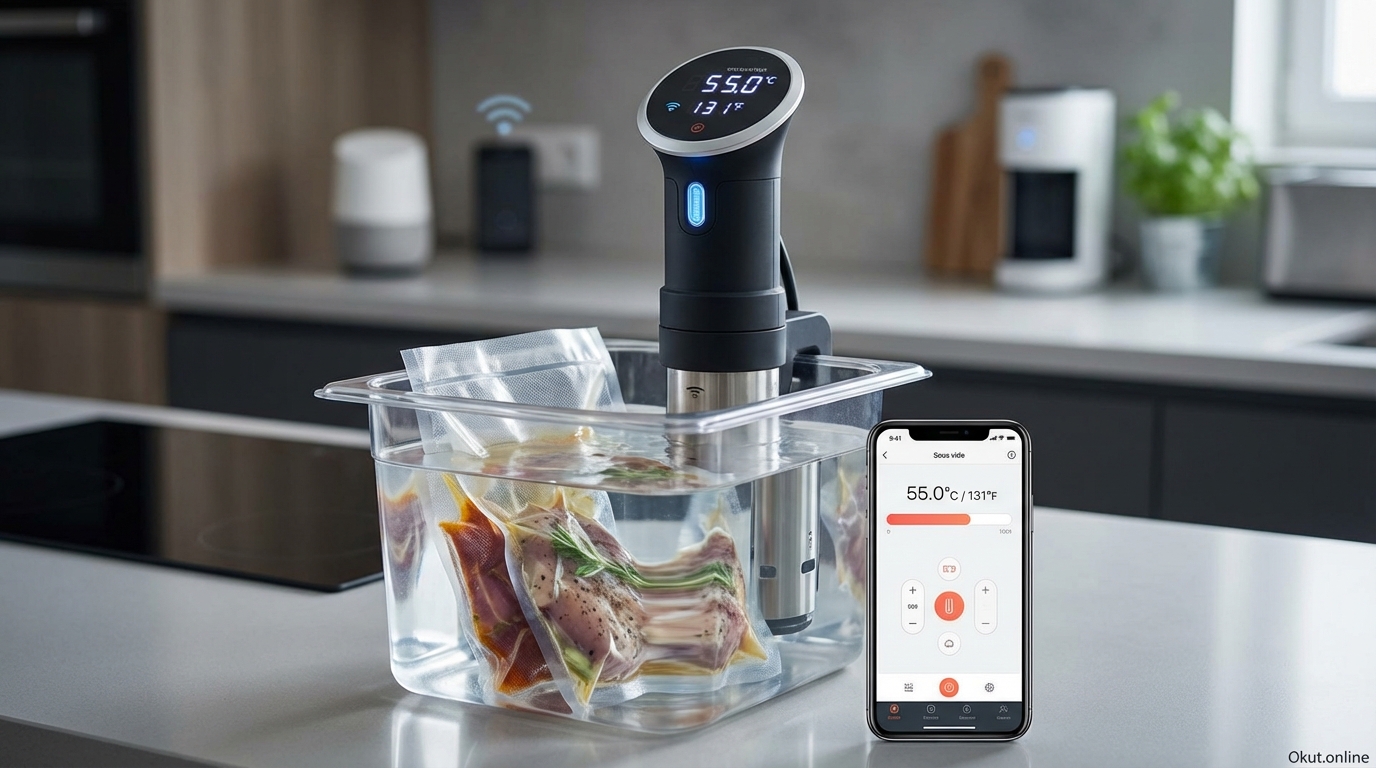
WiFi-connected sous vide circulators have made precision cooking accessible to home cooks, enabling restaurant-quality results through precise temperature control and app-based monitoring. In 2026, smart sous vide devices range from budget options under $100 to premium circulators with advanced features and powerful heating elements. This guide compares top WiFi sous vide cookers, explains how connectivity enhances the cooking experience, and helps you select the right precision cooker for your culinary adventures.
I. Understanding Sous Vide Cooking
Sous vide means “under vacuum” in French, referring to the technique of cooking vacuum-sealed food in precisely temperature-controlled water baths.
A. How It Works
Food is sealed in bags (vacuum-sealed or water displacement method) and submerged in water held at exact temperatures for extended periods.
Immersion circulators heat and circulate water, maintaining precise temperatures (typically within 0.1°F) throughout the bath.
Low temperatures cook food gently over longer periods—a steak might cook at 130°F for 2 hours rather than high heat for minutes.
B. Why Precision Matters
Precise temperature control eliminates overcooking. A steak at 130°F reaches exactly medium-rare throughout—no overdone exterior or underdone center.
Extended cooking times break down tough proteins while maintaining moisture. Tough cuts become tender without drying out.
Consistency becomes reliable. Same temperature and time produces identical results every time.
C. What WiFi Adds
Smart connectivity enables remote monitoring during long cooks, notification when cooking completes, and guided recipes through companion apps.
Multi-hour or overnight cooks benefit from remote checking without physically being in the kitchen.
App recipes automatically set time and temperature, removing guesswork for new sous vide cooks.
II. Top WiFi Sous Vide Cookers (2026)
A. Anova Precision Cooker Pro – $399
Anova’s professional-grade circulator provides maximum power and connectivity.
1200W heating element heats water quickly and maintains temperature even in large containers.
WiFi and Bluetooth connectivity for remote monitoring and control.
Anova app with thousands of recipes and guided cooking.
Commercial-grade construction for durability and heavy use.
IPX7 waterproof rating for full submersion during cleaning.
Best for: Serious home cooks and professionals wanting maximum power and reliability.
B. Anova Precision Cooker 3.0 – $149
Anova’s mainstream consumer device balances features and price.
750W heating adequate for most home cooking containers.
WiFi connectivity with same Anova app access as Pro model.
Touch controls on device plus full app control.
Adjustable clamp fits most pots and containers.
Best for: Home cooks wanting full smart features at moderate price.
C. Breville Joule Turbo Sous Vide – $249
Compact design with powerful heating in a minimalist form factor.
1100W heating in compact body heats quickly despite small size.
App-only control—no physical controls on device; all operation through smartphone.
Visual Doneness feature shows photo of expected results at different temperatures.
Alexa and Google compatible for voice control.
Magnetic base for bottom-of-pot positioning.
Best for: Tech-forward cooks comfortable with app-only control.
D. Inkbird WiFi Sous Vide – $79
Budget-friendly entry point for WiFi-connected sous vide.
1000W heating provides solid performance at entry-level pricing.
WiFi connectivity with Inkbird app for remote monitoring.
Physical controls plus app control for flexibility.
Budget pricing under $100 makes sous vide accessible.
Best for: Budget-conscious users exploring sous vide cooking.
III. Smart Sous Vide Features
A. Remote Monitoring
Check water temperature and remaining cook time from anywhere.
Multi-hour cooks (brisket at 155°F for 24 hours) benefit from periodic checks without visiting kitchen.
Receive notifications if temperature drops below target, indicating potential problems.
B. Remote Control
Adjust temperature remotely if you decide to modify cooking approach.
Start heating water from work so it’s at temperature when you arrive home to drop in food.
Extend cooking time remotely if you’re running late.
C. Guided Recipes
App recipes automatically configure time and temperature.
Select “ribeye steak” → choose desired doneness → app sets 129°F for 2 hours for medium-rare.
Removes guesswork, especially valuable for new sous vide cooks.
D. Doneness Notifications
Alerts when cooking window opens—minimum cook time reached.
Most sous vide cooking has a window (e.g., 2-4 hours) rather than precise moment.
Know when food is ready to sear and serve.
IV. Best Foods for Sous Vide
A. Excellent Results
- Steaks: Perfect edge-to-edge doneness impossible to achieve otherwise
- Pork chops: Juicy results without overcooking
- Chicken breast: Tender, never dry chicken
- Eggs: Precisely cooked eggs with unique textures
- Tough cuts: Brisket, short ribs, chuck tender without braising
- Fish: Delicate proteins cooked perfectly
B. Good Results
- Vegetables: Carrots, beets maintain texture while cooking through
- Desserts: Crème brûlée, cheesecake in jars
- Infusions: Flavor infusions for cocktail ingredients
C. Not Ideal
- Already tender vegetables: Asparagus, leafy greens are faster conventionally
- Crispy foods: Sous vide doesn’t crisp (requires searing after)
- Quick meals: Minimum cook times make sous vide slower for simple dishes
V. Equipment Beyond the Circulator
A. Containers
Large pots work but dedicated sous vide containers offer advantages.
Cambro containers (12 or 22 quart) provide more capacity and often include lids with circulator cutouts.
Lids reduce evaporation during long cooks and maintain temperature more efficiently.
B. Vacuum Sealers
Proper sealing removes air for better heat transfer and prevents floating.
Chamber sealers ($300+) handle liquids and marinades.
Edge sealers ($30-100) work for most home applications with some liquid limitations.
Water displacement method with zip-lock bags works in pinch without vacuum sealer.
C. Finishing Equipment
Sous vide cooking doesn’t brown—searing after is essential for many foods.
Cast iron pan for quick, high-heat searing.
Torch for localized crust development without overcooking interior.
VI. Common Mistakes to Avoid
- Not Searing After: Sous vide steak without searing lacks crust and looks unappetizing. Sear briefly after cooking.
- Inadequate Sealing: Air in bags causes floating and uneven cooking. Use proper sealing technique.
- Wrong Container Size: Food needs water circulation. Crowded containers cook unevenly.
- Skipping Rest: Unlike traditional cooking, sous vide food can sear immediately—no rest needed.
- Ignoring Food Safety: Long cooks at lower temperatures require attention to safe minimum temperatures.
VII. Practical Tips
- Pre-heat Water: Start circulator 15-20 minutes before adding food to reach stable temperature.
- Use Ice Baths: For holding cooked food, ice bath stops cooking and enables later searing.
- Season Before Sealing: Salt and seasonings work during long cooks; fresh herbs may become bitter.
- Dry Before Searing: Pat sous vide food completely dry before searing for better crust.
- Very Hot Sear: Sear in screaming hot pan for 30-60 seconds per side—quick to avoid overcooking.
VIII. Comparison Table
| Model | Price | Power | Controls | Best For |
|---|---|---|---|---|
| Anova Precision Pro | $399 | 1200W | Device + App | Maximum power |
| Anova Precision 3.0 | $149 | 750W | Device + App | Mainstream smart |
| Breville Joule Turbo | $249 | 1100W | App only | Compact power |
| Inkbird WiFi | $79 | 1000W | Device + App | Budget entry |
IX. Conclusion
WiFi sous vide cookers add valuable remote monitoring to precision cooking, particularly useful for the long cooks where sous vide excels. Anova leads with comprehensive app features and model range from budget to professional; Breville Joule offers compact power with app-only control; Inkbird provides budget entry to connected sous vide. The technique rewards investment for steak lovers, chicken perfectionists, and anyone wanting restaurant-quality results with scientific precision. Start with proven recipes, invest in proper sealing equipment, and don’t forget the sear—sous vide cooking delivers when you master the complete technique.
Have you tried sous vide cooking, and what dishes would you want to perfect? Share your sous vide experience in the comments!
About the Author