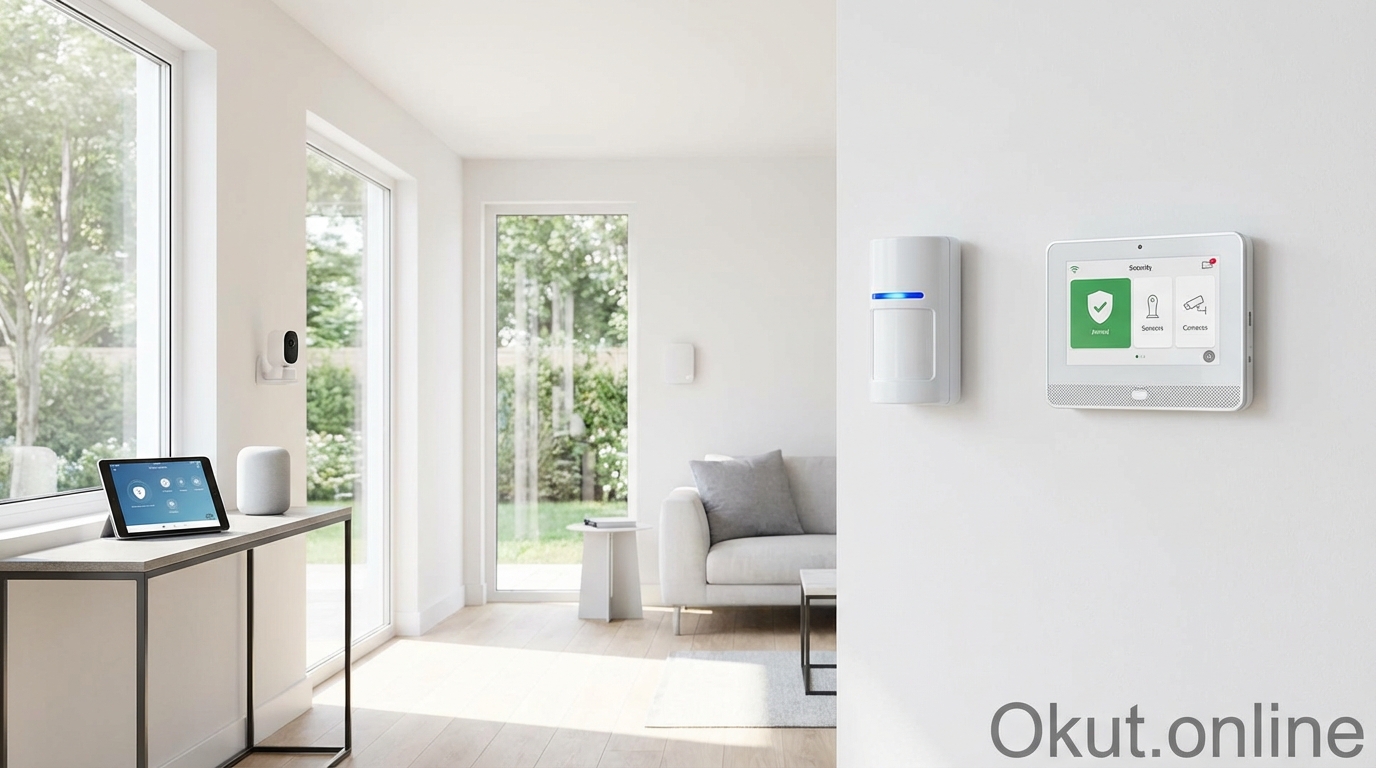
Smart motion sensors form the backbone of intelligent home security and automation systems, detecting presence and triggering everything from simple lighting to comprehensive alarm responses. In 2026, motion sensing technology has evolved far beyond basic passive infrared detection, incorporating radar, millimeter-wave, and AI-powered differentiation that can distinguish between humans, pets, and environmental triggers. This complete setup guide covers sensor selection, optimal placement strategies, alarm integration, and automation configurations that maximize the value of your motion sensing investment.
I. Understanding Motion Sensor Technologies
Before purchasing any motion sensor, understanding the underlying technologies helps you match sensor capabilities to your specific needs. Different sensing technologies excel in different situations, and the best home security systems often combine multiple sensor types for comprehensive coverage with minimal false alarms.
A. Passive Infrared (PIR) Sensors
Passive infrared remains the most common motion sensing technology in home security applications due to its proven reliability, low power consumption, and affordable pricing. PIR sensors detect changes in infrared radiation—essentially body heat—within their detection zone. When a person or animal crosses the sensor’s field of view, the temperature differential against the background triggers detection.
The “passive” designation indicates that these sensors don’t emit any energy themselves; they only receive infrared radiation from their environment. This passive operation enables exceptionally low power consumption—battery-powered PIR sensors can operate for 1-3 years on a single set of batteries, making them practical for wireless installation anywhere in your home.
PIR sensors detect motion perpendicular to the sensor most effectively. Someone walking across the sensor’s view creates stronger detection than someone walking directly toward or away from it. Understanding this characteristic helps you position sensors where intruders will naturally walk across the detection pattern rather than straight toward protected entry points.
Limitation awareness prevents frustration. PIR sensors may fail to detect slow-moving subjects that don’t create rapid temperature changes against the background. Very hot environments where ambient temperature approaches body temperature reduce detection sensitivity. Conversely, very cold environments can increase sensitivity to the point where warm air currents from heating systems trigger false alarms. Most quality sensors allow sensitivity adjustment to compensate for these environmental factors.
Pet-immune versions use lens designs that ignore heat sources below a certain height (typically 40-80 pounds equivalent, depending on the specific product). The lens creates dead zones in the lower portion of the detection field while maintaining full sensitivity at human height and above. This allows dogs and cats to move freely while still detecting human intruders, though very large dogs or pets that jump on furniture may still trigger alerts.
B. Microwave and Radar Sensors
Active radar sensors emit microwave energy and detect reflections from moving objects within the coverage zone. Unlike PIR sensors that detect heat, radar detects physical movement regardless of temperature. This makes radar reliable in environments with temperature variations that might affect infrared detection.
Radar sensors excel at detecting subtle movement through obstacles. Microwaves pass through common building materials—drywall, wooden doors, glass—allowing detection of motion in adjacent spaces that PIR sensors cannot see. This capability proves useful for detecting intruders in a room before they enter your protected space, but can create challenges with unwanted detection through walls into neighboring apartments or outdoor areas.
Dual-technology sensors combine PIR and radar sensing, requiring both technologies to detect motion before triggering. This dramatically reduces false alarms since random infrared fluctuations won’t trigger unless accompanied by physical movement, and motion of inanimate objects (falling branches outside the window visible through the glass) won’t trigger without accompanying heat signatures. The combination approach is standard in professional security installations where false alarm minimization is critical.
Advanced radar implementations like the Aqara FP2 use millimeter-wave radar for presence detection rather than just motion detection. Traditional sensors detect someone moving through a space but cannot tell if someone is sitting still reading a book. Presence sensors detect even stationary humans through subtle movements like breathing and heartbeat, maintaining occupancy awareness until the space is truly empty. This capability enables automations that keep lights on while you’re reading but turn them off within seconds of you actually leaving.
C. AI-Powered Motion Analysis
The newest generation of motion sensors incorporate computer vision and machine learning to analyze motion characteristics and categorize what they detect. Rather than simply triggering on any motion, these sensors distinguish between human movement patterns, pet activity, vehicles, and environmental motion like swaying vegetation.
On-device AI processing runs neural network models directly on the sensor’s embedded processor, analyzing motion locally without cloud connectivity requirements. This approach provides instant response times (no cloud round-trip delay), works during internet outages, and maintains privacy since video never leaves your home for analysis. Eufy and Aqara particularly emphasize on-device AI in their consumer security products.
Cloud-based AI analysis, used by Ring, Nest, and others, sends video clips to external servers where more powerful hardware runs sophisticated analysis. Cloud processing can provide more accurate categorization using larger AI models too resource-intensive for embedded processors, but introduces 1-3 seconds of delay before categorized alerts reach your phone and requires functional internet connectivity.
II. Top Smart Motion Sensors (2026)
The sensor market ranges from basic $10 units providing essential detection to $100+ devices with advanced sensing capabilities. The right choice depends on your integration requirements, environmental conditions, and the specific use cases you’re addressing.
A. Aqara FP2 Human Presence Sensor – $79
The FP2 represents a fundamental advancement in consumer motion sensing, using millimeter-wave radar for true presence detection that maintains awareness of stationary occupants.
Presence detection versus motion detection addresses a fundamental limitation of traditional sensors. When you sit down to read, work at your desk, or watch television, traditional motion sensors timeout and report the room as unoccupied even though you’re still there. The FP2’s radar detects the micro-movements of breathing and other subtle human presence indicators, correctly showing the room as occupied until you actually leave. Lights controlled by FP2 presence stay on as long as you’re in the room—no more waving your arms to retrigger motion sensors.
Zone configuration allows dividing the sensor’s coverage into up to 30 distinct zones (the actual usable number is typically 3-5 depending on room layout). Each zone reports occupancy independently, enabling sophisticated automations like “turn on desk lamp when I’m at the desk but turn on floor lamp when I’m on the couch” from a single sensor.
Multi-target tracking detects up to 5 people simultaneously, correctly reporting the number of room occupants. Combined with zone awareness, you can create automations responding to who is where within a room rather than just whether anyone is present.
Native Apple HomeKit and Matter support enable direct integration without manufacturer-specific hubs for the basic functionality. Full features require the Aqara hub for advanced zone configuration and firmware updates, but basic presence sensing works directly with HomeKit or any Matter-compatible platform.
Power requirements demand wired installation via USB-C power. No battery option exists due to the power demands of continuous radar operation. Plan for cable routing to an outlet within the sensor’s USB cable length (typically 2 meters, with USB-C extension cables available if needed).
B. Philips Hue Indoor Motion Sensor – $44
For homes already invested in the Philips Hue smart lighting ecosystem, the Hue motion sensor provides seamless integration that triggers lighting scenes without any additional configuration complexity.
Hue ecosystem integration means the sensor appears instantly in the Hue app alongside your lights, with straightforward configuration tying motion to specific scenes or brightness levels. The time-based configuration automatically adjusts response throughout the day—bright activation during evening hours, dim low-level activation at night, different responses on weekends versus weekdays.
Combined light and temperature sensing extends functionality beyond motion. The ambient light threshold prevents daytime activations when natural light is sufficient, and the temperature data enables climate-related automations through the Hue app or third-party platforms like Home Assistant.
Magnetic mounting simplifies installation and repositioning. The ball-and-socket magnetic mount allows precise angle adjustment without tools and easy removal for battery replacement. The two AAA batteries last approximately 2 years with typical usage, and the sensor provides weeks of warning before batteries deplete.
Zigbee protocol ensures reliable communication across your home’s Hue mesh network. Unlike Wi-Fi sensors that may struggle at range limits, Zigbee sensors piggyback on your existing Hue light bulbs as repeaters, providing consistent coverage throughout your home without dead zones.
C. Ring Alarm Motion Detector (2nd Gen) – $29
Ring’s motion detector is designed primarily for security applications, triggering alarm responses when the system is armed while providing motion-based automations and notifications.
Ring Alarm integration makes this sensor a component of a complete security system rather than a standalone device. When Ring Alarm is armed in Away mode, motion triggers full alarm response with monitoring center notification (if subscribed). Home mode allows customization—perhaps arming outdoor sensors while ignoring indoor motion sensors so you can move freely.
Pet-immune design ignores motion from animals up to 50 pounds when properly installed and configured. Larger pets or animals that jump on furniture may trigger detection; households with large dogs might need sensitivity adjustment or strategic placement in rooms pets don’t access.
Extended battery life—3 years with typical use—minimizes maintenance requirements. Low-battery warnings provide weeks of advance notice through the Ring app, preventing dead batteries from creating security gaps.
Alexa integration enables voice-triggered queries (“Alexa, was motion detected in the living room?”) and routine triggers that activate when motion is detected. The motion-to-routine capability enables lighting automation, notifications, and other responses beyond just security alarms.
D. Wyze Motion Sensor v2 – $8
Wyze delivers remarkable value for basic motion sensing needs, though the required hub adds to the total system cost.
The $8 sensor price makes covering multiple rooms affordable where premium sensors would be prohibitively expensive. Covering 10 rooms with Wyze sensors costs $80 in sensors plus the $30 Wyze Sense Hub—$110 total. The same coverage with premium sensors would run $400-800. For basic motion detection without advanced presence features, Wyze provides exceptional value.
Wyze Sense Hub (required, $30) connects all Wyze sensors to your network and provides the bridge to the Wyze app for notifications and automations. One hub supports many sensors, so the hub cost spreads across your entire sensor deployment.
Basic automation triggers integrate with Wyze cameras, lights, and plugs. Motion in the hallway can trigger the hallway light, start camera recording, and send your phone a notification—all within the Wyze ecosystem without third-party integrations.
Battery life reaches 18+ months with typical usage, using a CR2450 coin cell battery. Replacement batteries cost under $2 each, so ongoing maintenance costs are trivial.
Limitations include the requirement for the Wyze hub (not standalone operation), lack of pet-immunity beyond basic sensitivity adjustment, and fewer integration options compared to Zigbee or Z-Wave sensors. For comprehensive smart home integrations beyond Wyze products, other sensor options provide more flexibility.
III. Alarm System Integration
Motion sensors provide maximum security value when integrated into comprehensive alarm systems that respond automatically to intrusions. Whether using DIY monitoring or professional services, proper integration ensures your sensors actually protect your home rather than just sending notifications you might miss.
A. DIY Alarm Platforms
SmartThings, Home Assistant, Hubitat, and similar platforms create unified alarm systems from various brands of sensors, cameras, and sirens. These platforms accept sensors from multiple manufacturers, providing flexibility to choose the best sensor for each location regardless of brand.
SmartThings works with most Zigbee and Z-Wave motion sensors out of the box. Create a “Smart Home Monitor” security setup that arms/disarms on schedule or geofence, triggers sirens and notifications when motion is detected while armed, and integrates with Samsung SmartThings cameras for visual verification. The free tier provides basic functionality; the Guardian subscription ($4.99/month) adds professional monitoring.
Home Assistant offers maximum flexibility for technically-inclined users. Compatible with virtually any sensor protocol (Zigbee, Z-Wave, Wi-Fi, Bluetooth, Thread, Matter), Home Assistant creates sophisticated alarm logic impossible with simpler platforms. You might configure an alarm that triggers differently based on time of day, which zones detect motion, whether motion validates across multiple sensors (reducing false alarms), and whether cameras confirm human presence before alarming. The complexity enables extremely reliable systems but requires significant setup effort.
Hubitat provides local processing with no cloud dependency, appealing to privacy-focused users and those wanting reliability during internet outages. All automation logic runs on a local hub, so your alarm system continues functioning regardless of internet status. The lack of cloud dependency means no subscription fees ever, though it also means no access to advanced cloud AI features some services provide.
B. Professional Monitoring Services
Professional monitoring adds a 24/7 staffed response center that dispatches emergency services when alarms trigger and you don’t respond to verification calls.
Ring Protect Pro ($20/month) monitors Ring Alarm systems including motion sensors, entry sensors, and smoke detectors. When an alarm triggers, the monitoring center attempts to contact you for verification. If you don’t respond or confirm the emergency, they dispatch police, fire, or medical services to your address. The service includes cellular backup so monitoring continues during internet outages.
SimpliSafe ($27.99/month for complete protection) provides professional monitoring for their proprietary sensor ecosystem. Their motion sensors integrate seamlessly with the SimpliSafe base station, with monitoring center response similar to Ring’s service. Secret alerts allow silent notification of motion in sensitive areas without triggering the full alarm—useful for monitoring children’s rooms or areas where you want awareness without alarm response.
ADT and traditional security services ($28-52/month typically with long contracts) offer the most established monitoring infrastructure with fastest average police response times in many areas. Their sensors are proprietary but professional-grade, typically installed by technicians who ensure optimal placement. The higher cost and contract requirements make this option most suitable for high-value properties or users wanting completely hands-off professional installation and monitoring.
C. Entry Delay and Instant Zones
Proper zone configuration prevents false alarms while ensuring rapid response to actual intrusions. Understanding zone types helps you configure an alarm system that protects without constant frustration.
Entry delay zones provide a countdown period (typically 30-60 seconds) for you to disarm the system when you enter through designated doors. Motion sensors in entry paths should be entry delay zones—you don’t want the alarm screaming or police dispatched because you took 20 seconds to find your phone and disarm the app after walking in the front door.
Instant zones trigger immediately with no delay when the system is armed. Motion sensors in areas you wouldn’t access when entering normally—back bedrooms, basement, garage interior—should be instant zones. An intruder entering through a back window should trigger immediately, not get a countdown period to disable your system.
Interior follower zones trigger only after an entry delay zone activates first. This prevents false alarms from indoor motion when you’re home with the system in “Home” mode—interior motion is ignored since entry points weren’t breached. When armed in Away mode after all occupants leave, interior sensors become active after the entry delay expires.
24-hour zones monitor continuously regardless of arm/disarm state. Smoke detectors and carbon monoxide sensors typically configure as 24-hour zones since these emergencies matter whether you’re home or away, awake or asleep, with the system armed or disarmed.
IV. Strategic Placement Guidelines
Optimal sensor placement maximizes detection of actual threats while minimizing false alarms from expected activity, pets, or environmental factors. Placement mistakes cause either security gaps or constant false alarms that train you to ignore alerts—both outcomes defeat the purpose of installing sensors.
A. Interior Motion Sensor Placement
Install motion sensors in rooms intruders must pass through to access valuables or move through your home. The goal is intersecting likely intruder paths, not covering every square foot of floor space.
Hallways and stairways represent natural chokepoints that intruders cannot avoid. A single sensor in a central hallway might detect anyone moving between bedrooms, bathrooms, and living areas. Stairway sensors catch anyone moving between floors.
Rooms with valuables deserve direct coverage. Home offices with computers and documents, master bedrooms where jewelry is commonly stored, and living rooms with electronics all benefit from sensors that detect anyone entering regardless of their approach path.
Mounting height affects pet-immunity and coverage pattern. Most sensors recommend 6-7.5 feet mounting height for optimal detection. Too low and the sensor may miss activity; too high and the lens angle may create coverage gaps. Pet-immune sensors specifically require proper height for the lower-zone dead space to work correctly.
Avoid pointing sensors at major heat sources (radiators, sunny windows, heating vents) that can cause infrared fluctuations triggering false alarms. Similarly avoid positions where outdoor temperature changes are visible through windows, such as sensors that “see” vehicles with warm engines in the driveway.
B. Corner mounting maximizes coverage
PIR sensors mounted in room corners view across the entire room with motion most frequently perpendicular to the sensor (where PIR detection is strongest). Center-wall mounting works when covering a specific area but corner mounting provides the broadest possible coverage from a single sensor.
Sensor angle should point slightly downward (typically 15-30 degrees) to focus the detection pattern on floor-level activity rather than the upper portion of walls and ceiling. Most sensors include angled mounting brackets or ball-socket mounts for this adjustment.
Test coverage after installation by having someone walk normal paths through the protected area while you monitor for detection. Walk the perimeter, cross the middle, move slowly, move quickly—verify detection across all likely scenarios. Adjust placement or sensitivity based on testing results.
C. Outdoor Motion Sensor Placement
Outdoor sensors face additional challenges from wildlife, weather, and environmental movement that indoor sensors don’t encounter. Success requires more careful placement and often sensor types designed specifically for outdoor use.
Cover approach paths to entry points rather than trying to cover your entire yard. Walkways to doors, driveways, and gates between yard sections are high-value coverage areas. Someone crossing these paths toward your home represents a likely threat; general yard activity often doesn’t.
Avoid pointing sensors at vegetation that moves in wind, roadways with passing vehicles, or neighbor activity areas that will generate constant false triggers. The narrow mounting positions that avoid these nuisances while still covering approach paths may require testing multiple locations.
Dual-technology or AI-based sensors dramatically improve outdoor reliability. Simple PIR sensors trigger on any heat source moving through the field, including wildlife, heated car exhaust from the street, or even sun-heated objects cooling at dusk. Dual-tech or AI sensors analyze what triggered detection and filter out non-human sources.
Weatherproof ratings matter for outdoor installation. Look for IP65 or higher, indicating protection against water jets from any direction. Lower ratings may specify protection from rain but fail in heavy storms, lawn sprinkler spray, or pressure washing.
V. Automation Beyond Security
Motion sensors enable far more than security alarms. The same sensors that detect intruders can automate lighting, climate, and other systems for convenience and energy efficiency throughout your daily life.
A. Lighting Automation
Motion-triggered lighting represents the most common automation use case, automatically illuminating spaces when you enter and turning off when you leave.
Bathroom lighting automation works exceptionally well because bathroom visits are brief and predictable. Motion triggers light on at appropriate brightness (full during day, dim at night to preserve sleep), and timeout turns off within 5 minutes of no motion. No more fumbling for switches or walking into a dark bathroom—motion handles it automatically.
Hallway and stairway lighting guides navigation throughout your home. Motion in the hallway triggers lights at the appropriate level; you might configure bright illumination during evening hours, dim nightlight-level after 10 PM, and no activation during daylight when natural light suffices.
Arrival and departure routines use entry area sensors to trigger whole-house lighting scenes. Motion at the front door triggers the “Welcome Home” scene lighting the hallway, living room, and kitchen. Departure can be trickier—many users combine door sensor (door closed) with motion cessation (no motion for 5 minutes after door close) to confirm you’ve left and trigger “Goodbye” scenes turning down lights and adjusting thermostat.
B. Climate Control Integration
Motion sensors help thermostats understand occupancy beyond simple schedules, responding to actual presence rather than assumed patterns.
Room-level temperature management uses motion to understand which rooms are actually occupied. Combined with multi-zone HVAC or smart vent systems, you can direct heating/cooling to occupied rooms while reducing conditioning in empty spaces. A bedroom occupied only at night doesn’t need daytime heating; an office empty on weekends can setback temperatures without programming specific schedules.
Whole-home occupancy for single-zone systems adjusts the overall thermostat based on whether anyone is home. Motion in any room indicates occupancy; no motion across all sensors for an extended period indicates an empty home and triggers energy-saving setback. This approach supplements or replaces smartphone geofencing, which can be unreliable when phones stay home, multiple family members have different schedules, or guests are present.
C. Appliance Control
Motion sensors extend to controlling any device through smart plugs, switches, or direct integration.
Exhaust fan automation in bathrooms eliminates the need to remember manual switches. Motion triggers fan on with the light; a humidity sensor or timer determines when to shut off, ensuring moisture is properly vented without running the fan all day when you forgot to turn it off.
Television and entertainment system standby uses motion cessation to trigger power-off after extended no-motion periods. Fall asleep with the TV on? Motion sensor notices no movement for 30 minutes and triggers power-off, saving energy and eliminating the blue light that might disrupt sleep.
Pet-related automations use motion (with pet-size detection if available) to control pet doors, automatic feeders, or pet-safe space heaters that operate only when the pet is in the area.
VI. Common Motion Sensor Mistakes
- Installing Without Testing: Every installation should include a walk-through verifying detection from all approach angles, at different walking speeds, and in conditions that might affect detection (darkness, temperature extremes). Discovering gaps during an actual incident is disastrous.
- Ignoring Battery Warnings: Low-battery sensors may function intermittently, detecting some motion while missing others. Respond to low-battery alerts immediately—a sensor with dead batteries provides zero protection and you won’t know it’s failed until you check the app.
- Pointing at Windows: PIR sensors detect temperature changes, and vehicles, sun-heated surfaces, and even pedestrians visible through windows can trigger false alarms. Position sensors to view room interiors, not outdoor scenes through glass.
- Wrong Height for Pet Immunity: Pet-immune features rely on lens geometry that creates dead zones at specific heights. Mounting too low places pets in the active zone; mounting too high may miss human motion. Follow manufacturer height specifications exactly.
- Overcomplicating Automation: Complex automation rules with many conditions often fail in edge cases, doing the wrong thing at unpredictable times. Start with simple automations that work reliably, then add complexity only when simple solutions prove insufficient.
- Not Adjusting Sensitivity: Default sensitivity works for average conditions but may not suit your specific environment. Too sensitive triggers constant false alarms; too conservative misses legitimate motion. Tune sensitivity based on actual performance in your installation.
VII. Practical Tips for Motion Sensor Success
- Create a Testing Schedule: Monthly, walk through your home while monitoring sensor activity through your app. Verify every sensor detects your movement and that detection reaches your monitoring platform correctly. This takes 10 minutes and prevents discovering failures when they matter.
- Label Sensors Clearly: “Living Room East” and “Living Room West” are infinitely more useful than “Motion 1” and “Motion 2” when reviewing alerts or debugging automations. Take time during setup to assign meaningful names.
- Document Placement Decisions: Write down why you positioned each sensor where you did, including what it covers and what problems you avoided. When family members or future residents question placement or want to move sensors, documentation prevents rediscovering problems you already solved.
- Keep Spare Batteries: Order replacement batteries when you install sensors so they’re on hand when low-battery alerts arrive. The specific battery types (CR123A, CR2450, AAA, etc.) may not be immediately available locally, causing dangerous gaps if you have to order and wait.
- Consider Backup Coverage: For critical paths, two sensors provide redundancy if one fails or has detection gaps. The primary sensor handles normal duty; the backup catches anything the primary misses and alerts you to primary sensor problems.
- Review False Alarm Patterns: When false alarms occur, investigate the cause rather than just dismissing the alert. Repeated false alarms often indicate environmental factors you can address (vegetation movement, HVAC airflow, pet access) or placement problems worth correcting.
VIII. Conclusion
Smart motion sensors provide the awareness layer that makes home security and automation systems genuinely intelligent, detecting presence and movement to trigger appropriate responses throughout your home. Technology choices range from basic PIR sensors at under $10 to sophisticated presence detection using millimeter-wave radar at premium prices—each has appropriate applications depending on your needs. Strategic placement in chokepoints and valuable areas, proper integration with alarm systems, and thoughtful automation configurations transform motion detection from a single-purpose security feature into a comprehensive presence awareness system that improves security, convenience, and energy efficiency simultaneously. Start with important areas using quality sensors, expand coverage as budget allows, and continuously refine your placement and configurations based on real-world performance.
What areas of your home would benefit most from motion sensing, and what automation possibilities interest you? Share your ideas in the comments!
About the Author