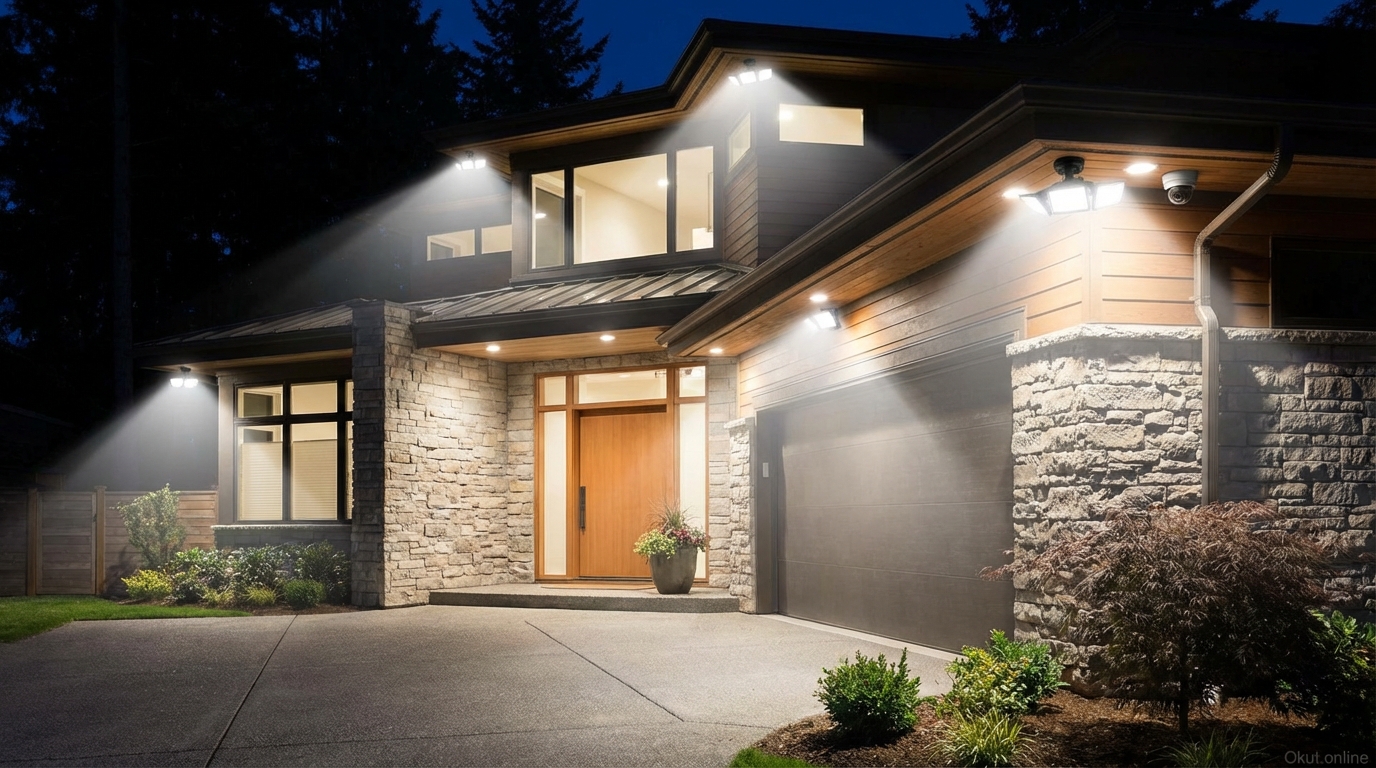
Outdoor motion sensor lights remain one of the most effective and affordable security measures available, eliminating the darkness that intruders rely on while automatically illuminating your property when activity is detected. In 2026, these lights have evolved into sophisticated smart devices offering app control, camera integration, and intelligent detection that distinguishes people from animals and vehicles. This comprehensive guide covers the best motion-activated lights, optimal placement strategies, and smart integrations that maximize security while minimizing energy waste and false alarms.
I. The Security Value of Motion-Activated Lighting
Motion sensor lights provide security benefits beyond simple illumination. Understanding why these lights deter intruders and enhance overall home security helps you design an effective outdoor lighting strategy rather than just adding lights randomly.
A. Criminal Psychology and Lighting
Darkness provides criminals two essential protections: concealment during the approach and reduced witness visibility during criminal acts. Motion-activated lighting disrupts both advantages simultaneously and unexpectedly, creating psychological deterrence that often prevents crimes before they’re attempted.
The startle effect of sudden illumination triggers instinctive flight responses in many individuals. Someone approaching your property with ill intent—or even uncertain intent—experiences an immediate awareness that they’ve been detected. Unlike leaving lights on continuously (which intruders can observe and plan around), motion-triggered illumination happens when they’re already committed to approaching, catching them during the act of encroachment.
Target hardening psychology recognizes that visible security measures discourage criminals by increasing perceived risk. Motion sensor lights signal an attentive homeowner who has invested in security—suggesting other measures (cameras, alarms, attentive neighbors) likely exist as well. Criminals generally seek easy targets; homes with visible security measures appear to be harder targets and receive less criminal attention.
Law enforcement consistently recommends lighting as a fundamental security measure because its effectiveness is well-documented. Studies of residential burglary patterns show that well-lit properties experience fewer intrusion attempts than dark ones in the same neighborhoods. The protection extends beyond burglary to other property crimes, vandalism, and even package theft.
B. Beyond Security: Practical Benefits
Motion sensor lights provide everyday convenience that makes their security value almost incidental to regular use.
Safe navigation along walkways, steps, and driveways prevents trips and falls when arriving home after dark. Hands full of groceries don’t require fumbling for switches—motion detection handles illumination automatically. This convenience value often exceeds security value in daily use.
Energy efficiency comes from lights operating only when needed rather than burning all night. A motion sensor light might operate 30-60 minutes nightly compared to 8+ hours for dusk-to-dawn lighting—reducing energy consumption by 85-95% while providing equivalent or better security value through attention-grabbing activation rather than continuous glow.
Camera enhancement from motion-activated illumination ensures security cameras capture usable footage. Many cameras have limited night vision range; motion lights extending illumination to 30-50+ feet ensure subjects are well-lit for identification. Color night vision cameras particularly benefit since they require ambient light to capture color—motion lights provide that illumination precisely when it matters.
II. Types of Outdoor Motion Sensor Lights
Different lighting types serve different applications, from covering large yards to focusing narrow beams on specific entry points. Understanding each type’s strengths helps you select appropriate fixtures for each location around your property.
A. Hardwired Floodlights
Hardwired floodlights connect to your home’s electrical system, providing unlimited power for the brightest illumination and most reliable operation. These represent the gold standard for permanent, high-performance outdoor lighting.
Brightness levels typically range from 1,500 to 5,000+ lumens, capable of illuminating entire yards or driveways with daylight-equivalent intensity. Multiple adjustable heads allow covering different areas from a single fixture, and the focused beam patterns of flood optics throw light 50-100+ feet from mount points.
Continuous power means no batteries to replace, no solar panel positioning to optimize, and consistent performance regardless of weather conditions or seasonal daylight variations. The fixture simply works, day after day, year after year, with minimal maintenance beyond occasional cleaning and bulb replacement (LED bulbs last 15-25 years in typical use).
Installation requirement is the primary disadvantage—connecting to home electrical systems requires running wires, potentially through walls or underground, and proper electrical connections that may require professional installation. If you’re comfortable with basic electrical work and have existing outdoor electrical boxes, DIY installation is straightforward. Otherwise, budget $100-300 for electrician installation.
Smart hardwired floodlights add Wi-Fi connectivity to traditional flood lighting, enabling app control, scheduling, sensitivity adjustment, and integration with smart home systems. Ring Floodlight Wired and RAB Lighting’s smart fixtures represent this category, providing maximum brightness with the controllability of modern smart devices.
B. Battery-Powered Spotlights
Battery-powered motion lights install anywhere without electrical work, making them perfect for renters, temporary installations, or locations where running wires is impractical or prohibitively expensive.
Brightness ranges from 200-800 lumens typically, substantially less than hardwired floods but adequate for illuminating focused areas like entry points, walkways, or specific dark corners. The focused beam patterns of spotlights concentrate available brightness into useful cones rather than spreading thin across wide areas.
Battery life varies from 3-12 months depending on activity frequency, brightness settings, and battery technology. High-activity locations (front doors, driveways) deplete batteries faster than low-activity secondary installations. Rechargeable batteries in most modern battery lights reduce ongoing costs compared to disposable batteries, though you’ll need to bring units inside for charging periodically.
Quick installation with screws or adhesive mounting positions lights in minutes without any electrical knowledge. The flexibility to easily reposition lights as you learn which placements work best, and to take lights with you when moving, suits many homeowners’ needs.
Solar panel accessories for many battery lights extend battery life or eliminate charging requirements entirely, creating a hybrid that combines battery flexibility with solar sustainability. Ring and Arlo both offer solar panel options for their battery-powered spotlights.
C. Solar-Powered Lights
Solar motion lights operate entirely on sunlight, requiring no electrical wiring, no battery replacement, and no ongoing energy costs. This zero-maintenance appeal makes solar lights popular for remote locations and eco-conscious homeowners.
Brightness typically ranges from 100-400 lumens for integrated-panel designs, with higher brightness (up to 1,000+ lumens) available on fixtures with separate, larger solar panels. Brightness limitations stem from the relationship between panel size, battery capacity, and energy consumption—more light requires more power requires more sunlight and storage.
Panel positioning critically determines performance. Panels need 4-6+ hours of direct sunlight daily for reliable operation. Shaded locations, north-facing walls in the Northern Hemisphere, or areas shadowed by obstacles won’t collect enough energy for bright, reliable illumination. Evaluate specific mounting locations’ sun exposure before committing to solar solutions.
Seasonal variation affects solar lights more than other types. Winter’s shorter days and lower sun angles reduce energy collection, potentially leaving batteries partially charged and limiting brightness or operational duration. Summer typically provides surplus charging; winter may require expectations adjustment for solar-dependent installations.
Weather dependence means several consecutive cloudy days can deplete reserves accumulated during sunny periods. Quality solar lights with larger panels and batteries handle weather variations better than budget models with minimal reserves. Choose higher-capacity systems if your location experiences frequent extended cloudy periods.
D. Camera-Integrated Floodlights
Combination devices integrate floodlighting, motion detection, and security cameras into unified systems that illuminate, record, and alert simultaneously. These all-in-one solutions simplify installation while providing comprehensive coverage from single mounting points.
Ring Floodlight Cam, Arlo Pro 3 Floodlight, and EufyCam Floodlight exemplify this category, combining 2,000+ lumen floodlighting with 1080p-4K cameras, two-way audio, sirens, and full smart home integration. Motion triggers both illumination and recording, ensuring cameras capture well-lit footage of any activity.
Single installation instead of separate light and camera mountings reduces setup complexity while ensuring coordination that separate devices require extra configuration to achieve. The same motion detection triggers both systems simultaneously; there’s no lag between detection and illumination that might occur with independent devices.
Power requirements—hardwired installation for most camera floodlights—limit placement flexibility but enable the constant power draw that cameras with continuous recording capability require. Battery-powered alternatives like the Ring Floodlight Cam Wired Plus exist but with compromises on either brightness or continuous recording features.
Subscription considerations apply to most camera floodlights. Ring, Arlo, and others require monthly subscriptions ($3-15/month) for cloud video storage, advanced AI detection features, and professional monitoring options. Factor ongoing costs into purchase decisions, especially compared to standalone lights without recurring fees.
III. Top Motion Sensor Lights (2026)
These recommendations represent the best products across different power types and use cases, from budget-friendly basics to premium smart-home-integrated solutions.
A. Ring Floodlight Cam Wired Plus – $199
Ring’s camera-integrated floodlight delivers comprehensive coverage for the most security-conscious homeowners, combining bright illumination with monitoring, recording, and smart home integration.
2,000 lumens from dual LED floodlight heads illuminate large areas with flexible positioning—each head adjusts independently to cover different angles from the single mounting point. Motion zones configure through the Ring app to trigger on activity in specific areas while ignoring motion in others.
1080p HDR camera captures clear footage day or night with color night vision when sufficient ambient light exists, or clear infrared black-and-white in complete darkness. Pre-roll capture records 4 seconds before motion detection, ensuring you see how events began rather than joining mid-action.
Two-way talk through the built-in speaker and microphone enables conversation with anyone in the camera’s view. Greet delivery drivers, warn off suspicious visitors, or simply communicate with family members working in the yard from anywhere you have phone access.
110dB siren provides audible deterrent capability triggered manually through the app or automatically through alarm integration. The siren’s loudness rivals dedicated security sirens and can be heard clearly from significant distances.
The Alexa ecosystem integration enables voice commands (“Alexa, show me the front yard”), routine triggers based on motion detection, and announcements through Alexa devices when motion is detected. For Amazon/Alexa households, Ring provides the most seamless integration available.
Ring Protect subscription ($3.99/month for single device or $10/month for unlimited) unlocks video recording history, enhanced motion detection, snapshot capture, and sharing capabilities. Basic functionality works without subscription but recording requires the plan.
B. Arlo Pro 3 Floodlight Camera – $249
Arlo’s premium floodlight camera delivers higher resolution video with the industry’s most generous free tier for camera functionality without subscription dependency.
2,000 lumens match Ring’s illumination capability with adjustable brightness levels through the Arlo app. The dual floodlight heads adjust independently for coverage flexibility.
2K HDR video resolution captures more detail than Ring’s 1080p, with noticeable improvement when zooming into recorded footage to identify faces or read license plates. Color night vision maintains color recording in low-light conditions using the floodlights’ illumination.
160° field of view exceeds most competitors, capturing wider scenes with fewer blind spots. The panoramic coverage particularly benefits corner installations where wide views are needed.
7 days free cloud storage provides a week of recording without any subscription—the most generous free tier among major smart camera brands. For basic recording needs, this free tier may eliminate subscription needs entirely.
Platform compatibility spans Alexa, Google Home, SmartThings, and IFTTT, accommodating various smart home ecosystems without the tight lock-in of Ring’s Amazon-focused integration. Apple HomeKit integration requires the Arlo Smart Home Bridge accessory.
Arlo Secure subscription ($7.99/month per camera or $12.99 for unlimited) extends cloud storage to 30 days, adds AI detection features (person, package, vehicle, animal differentiation), and includes emergency response features. The premium tier justifies its cost for heavy users needing extended history and advanced features.
C. LEONLITE LED Motion Security Light – $45
For powerful, reliable illumination without smart features or subscription requirements, LEONLITE provides exceptional value as a traditional motion-activated floodlight.
3,000 lumens from dual adjustable heads deliver bright illumination rivaling pricier smart alternatives. The LED emitters produce 5000K daylight-equivalent color temperature with excellent color rendering for identification purposes.
Detection range reaches 70+ feet with 180° detection angle, covering substantial areas from single mounting points. Adjustable sensitivity and duration controls (via dials on the fixture) tune response without app configuration.
Hardwired installation requires electrical connection but provides the reliability of constant power without batteries or solar concerns. Standard flood light wiring connects without specialized knowledge.
No smart features means no app control, no phone notifications, and no integration with smart home systems. The light operates independently based solely on motion detection and photocell-controlled dusk/dawn awareness. For many applications, this simplicity represents an advantage rather than limitation.
No subscription ever required—this is a one-time purchase with no ongoing costs beyond negligible electricity consumption. The fixture simply works until LED emitters eventually fail (rated 50,000+ hours—over 25 years of typical outdoor use).
D. Ring Solar Floodlight – $89
Ring extends their ecosystem to solar-powered territory, providing wire-free installation with Ring integration for households wanting Ring compatibility without hardwired installation.
800 lumens from dual LED panels provides adequate illumination for entry points and focused areas, though significantly less than hardwired alternatives. The brightness suits supplementary installations rather than primary security lighting.
Integrated solar panel charges the internal battery during daylight, potentially eliminating manual charging entirely in favorable sun exposure conditions. The ring app monitors battery level and solar charging status, alerting if charging is insufficient.
Motion-activated plus on-demand control through the Ring app lets you illuminate the area manually when desired, not just when motion triggers automatically. Remote activation proves useful for checking on areas before arriving home or illuminating for arriving guests.
Ring Alarm integration treats motion detection from this floodlight as a security zone trigger, potentially activating alarm responses when the system is armed. The floodlight becomes a perimeter security sensor beyond just lighting.
Position requirements favor south-facing installations (in Northern Hemisphere) with 4+ hours of direct sun. Shaded locations or north-facing walls may not receive sufficient charging for reliable operation, particularly during shorter winter days.
IV. Optimal Placement Strategies
Where you position motion lights determines their effectiveness for security and convenience. Strategic placement provides comprehensive coverage; poor placement creates gaps intruders can exploit or causes nuisance false alarms.
A. Prioritizing Key Areas
Limited budget and installation effort require focusing on the highest-value locations first before expanding coverage.
Entry points including all exterior doors deserve priority coverage. Front doors, back doors, garage entries, and any side doors should have motion-activated illumination. Intruders attempting entry through doors create the activity your lights should detect; doors are also where legitimate visitors approach, benefiting from welcoming illumination.
Driveways and parking areas warrant coverage both for security (detecting vehicle and pedestrian approach) and convenience (safe navigation when returning home after dark). Long driveways may require multiple lights positioned to provide overlapping coverage rather than a single fixture leaving dark gaps.
Dark corners and concealment areas—spots where intruders could hide or approach unseen—often receive less attention but represent significant vulnerabilities. Areas behind landscaping, alongside buildings, or in recesses that don’t receive ambient light from neighbors or street lamps deserve deliberate illumination.
Pathways and walkways between house areas, to outbuildings, or connecting yard sections benefit from motion lighting that guides safe navigation while detecting unexpected activity in these transitional spaces.
B. Height and Angle Considerations
Mounting height and fixture angle dramatically affect coverage pattern, detection reliability, and resistance to tampering.
8-10 feet mounting height provides an optimal balance between coverage area and detection reliability for most applications. Higher mounting expands coverage but may miss detection of close activity; lower mounting reduces coverage and makes fixtures vulnerable to tampering or vandalism.
Downward angle of 15-30 degrees focuses illumination on ground-level activity where people walk rather than wasting brightness on vertical surfaces or distant backgrounds. Adjustable fixture heads allow tuning angle after installation based on actual illumination patterns observed at night.
Detection zone alignment should cover expected approach paths, not just the immediate area around the fixture. Motion entering the detection zone from sidewalks, driveways, or yard areas should trigger illumination before subjects reach entry points, not after they’re already at your door.
Avoid positioning that aims sensors toward streets, neighbor properties, or other areas with constant legitimate activity that would cause incessant false triggering. The goal is detecting activity on your property specifically, not monitoring general neighborhood movement.
C. Environmental Considerations
Environmental factors affect both motion detection reliability and fixture longevity. Planning for these factors prevents frustration and premature failures.
Avoid aiming sensors at heat sources that create infrared variations triggering PIR-based motion detection. HVAC exhaust vents, hot surfaces that cycle temperature as they heat and cool, or areas with strong reflected sunlight may cause false triggers. If unavoidable, radar-based or camera-based motion detection provides more reliable alternatives in these challenging locations.
Wind-affected vegetation in the detection zone will cause constant triggering if leaves, branches, or outdoor decorations move detectably. Either reposition to exclude problematic vegetation from the sensitive zone, trim vegetation to eliminate movement, or use AI-powered lights that can distinguish plant movement from human motion.
Weatherproofing ratings matter for longevity. Look for IP65 or higher ratings, indicating protection against water jets from any direction. Lower ratings may handle rain but fail in heavy storms, sprinkler overspray, or pressure washing. Higher ratings like IP67 provide additional protection for the most exposed installations.
V. Smart Home Integration
Modern motion lights integrate with broader smart home systems, coordinating response across multiple devices and enabling sophisticated automations beyond simple illumination.
A. Voice Assistant Integration
Voice control through Alexa, Google Assistant, or Siri provides hands-free operation and status queries.
“Turn on the backyard lights” illuminates on demand without reaching for phones or switches. Remote activation before going outside, for arriving guests, or to check on unusual sounds provides instant illumination without waiting for motion detection.
“What triggered the front light?” on some systems reports recent motion events, though natural language query support varies by device and platform.
Routine triggers use motion detection to initiate multi-device responses. Backyard motion at night might turn on outdoor lights, start camera recording, send phone notifications, and announce motion through indoor speakers—all from a single motion event.
B. Camera Coordination
Coordinating lights and cameras ensures cameras capture well-illuminated footage of security events.
Motion-triggered recording starts cameras recording when light motion sensors activate, capturing footage from the first moment of activity. Some camera and light combinations from the same manufacturer coordinate natively; cross-brand coordination requires smart home platform automation.
Light-enhanced night vision extends camera usefulness beyond their built-in night vision limitations. Motion lights illuminating subjects within camera view enable clear color footage at distances where infrared-only would produce dark or grainy results.
Coordinated detection zones align light activation areas with camera fields of view, ensuring anything triggering motion is also within camera coverage. Misaligned zones might illuminate areas cameras can’t see, wasting the coordination opportunity.
C. Alarm System Integration
Motion lights can serve as security system sensors, triggering alarm responses beyond just illumination.
Perimeter monitoring treats outdoor motion detection as the first line of intrusion detection. Motion detected while the alarm is armed can trigger alert escalation, camera recording, and eventually alarm activation if motion progresses toward entry points.
Full-brightness alarm response configures all outdoor lights to maximum brightness when alarm systems trigger, illuminating the entire property to eliminate intruder concealment and aid camera footage capture.
Panic lighting enables manual activation of all outdoor lights through alarm system panic buttons, providing instant full illumination when you feel threatened or want to investigate sounds without going outside in darkness.
VI. Common Mistakes to Avoid
- Sensitivity Set Too High: Maximum sensitivity causes constant triggering from minor movements—small animals, wind-blown objects, or even temperature changes. Start with moderate sensitivity and increase only if legitimate motion is missed, rather than starting high and dealing with constant false alarms.
- Aiming at Traffic Areas: Sensors facing roads, sidewalks, or neighbor driveways trigger continuously from legitimate activity you don’t need to monitor. Position sensors to detect approaches onto your property specifically, not general area movement.
- Inadequate Solar Positioning: Solar lights placed in shaded locations never charge fully, resulting in dim illumination and short operation times. Evaluate sun exposure at specific mounting locations before committing to solar solutions.
- Ignoring Overlap Gaps: Multiple lights with non-overlapping coverage create dark gaps between illuminated areas. Plan coverage patterns on paper before installation to ensure complete coverage without wasteful over-illumination of some areas while others remain dark.
- Visible Wiring Vulnerability: Exposed wiring leading to hardwired lights can be cut by intruders, disabling lights before approaching protected areas. Run wiring inside walls or conduit where possible; at minimum, run wiring at heights difficult to reach quickly.
- Single Point of Failure: Relying on a single light to cover critical areas means failure of that light eliminates coverage. Important areas warrant overlapping coverage from multiple lights so a single failure doesn’t create complete darkness.
VII. Practical Tips for Motion Light Success
- Test at Night: Coverage and detection patterns visible in darkness differ from daytime assumptions. Walk through detection zones at night while observing actual light behavior to identify gaps and adjust positioning.
- Mark Boundaries: If adjustable detection zones allow excluding areas from triggering, carefully map boundaries to exclude streets and sidewalks while including approach paths to your property. Many false alarm complaints stem from poorly configured zone boundaries.
- Regular Cleaning: Motion sensors and solar panels accumulate dust, pollen, and debris that degrade performance. Clean sensors quarterly with soft dry cloths; clean solar panels whenever visible debris accumulates.
- Coordinate with Neighbors: Motion lights that illuminate neighbor properties or shine into windows strain relationships. Position and aim lights to illuminate your property without creating nuisance glare for neighbors, and communicate about installations near property lines.
- Document Settings: When you find optimal sensitivity, duration, and zone settings, document them. Firmware updates or power interruptions sometimes reset settings; knowing your preferred configuration enables quick restoration rather than starting over.
- Seasonal Adjustment: The sun’s path changes seasonally, affecting solar charging and the positions where glare or shadows might cause problems. Review installations seasonally and adjust as needed for changed conditions.
VIII. Conclusion
Outdoor motion sensor lights provide proven, cost-effective security enhancement that works reliably year after year with minimal maintenance. From budget-friendly traditional floodlights like LEONLITE to comprehensive smart camera integrations like Ring Floodlight Cam and Arlo Pro 3 Floodlight, options exist for every budget and technology preference. Strategic placement prioritizing entry points, driveways, and dark corners maximizes security value; smart home integration enables sophisticated responses that coordinate lighting with cameras, alarms, and voice assistants. Whether you choose hardwired brightness, battery-powered flexibility, or solar sustainability, properly positioned motion lights eliminate the darkness intruders depend on while improving convenience and safety for your family’s everyday use.
Which areas of your property would benefit most from motion-activated lighting, and what features matter for your situation? Share your lighting plans in the comments!
About the Author