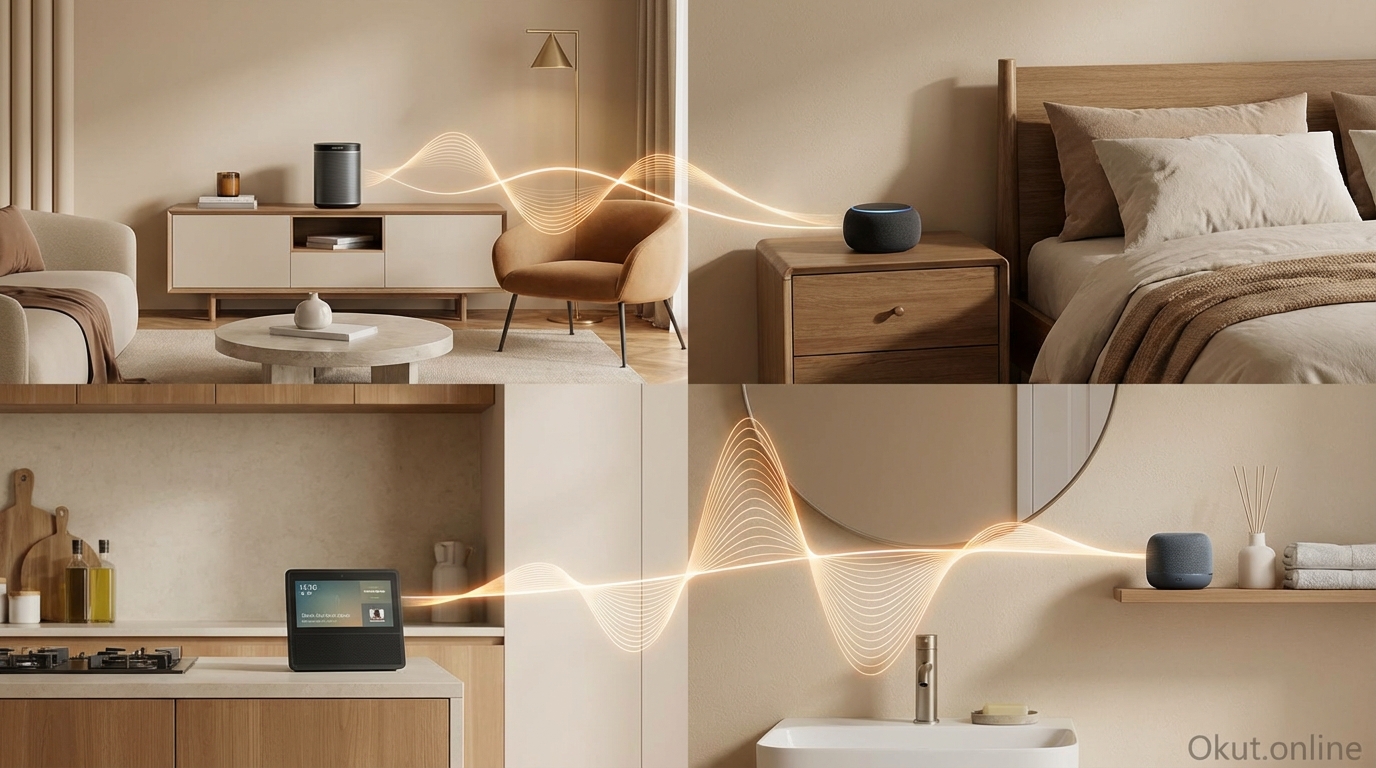
Smart speakers combine voice assistant functionality with audio playback, creating versatile devices that serve as both home automation hubs and music systems. In 2026, the market offers options ranging from budget mini speakers under $50 to premium audiophile systems exceeding $400. This comprehensive guide compares the major smart speaker lineups, examines audio quality differences, explains smart home integration capabilities, and provides room-by-room recommendations to help you select the right speakers for every space in your home.
I. Smart Speaker Categories
Understanding the different speaker categories clarifies what to expect at various price points and form factors.
A. Mini/Compact Speakers ($25-60)
Entry-level smart speakers prioritize voice assistant access and basic audio over premium sound quality.
Amazon Echo Dot, Google Nest Mini, and Apple HomePod mini represent this category. Audio quality suffices for podcasts, news, and casual music listening but won’t satisfy audiophiles or fill large rooms effectively.
Smart home hub functionality may exist despite compact size—HomePod mini serves as HomeKit hub; newer Echo Dots include Zigbee radios.
Ideal placement includes bedrooms, bathrooms, home offices, and secondary rooms where voice access matters more than audio performance.
B. Mid-Range Speakers ($80-150)
Mid-range options balance voice assistant capability with noticeably improved audio quality.
Amazon Echo (4th Gen) and Google Nest Audio exemplify this tier. Both deliver sound quality sufficient for most music listening, with fuller bass and clearer mids than mini speakers.
Room-filling volume without distortion suits living rooms, kitchens, and spaces where audio quality matters but audiophile standards aren’t required.
Additional features like built-in smart home hubs (Zigbee in Echo), temperature sensors, and improved microphone arrays justify the price increase.
C. Premium Speakers ($200-400+)
Premium smart speakers target users wanting excellent audio quality alongside voice assistant features.
Apple HomePod (2nd Gen), Amazon Echo Studio, and Google’s premium offerings compete for users who care about sound.
Spatial audio, Dolby Atmos support, room calibration, and premium drivers deliver genuinely impressive sound that competes with dedicated audio equipment.
Higher price reflects audio components approaching specialty speaker quality with smart functionality built in.
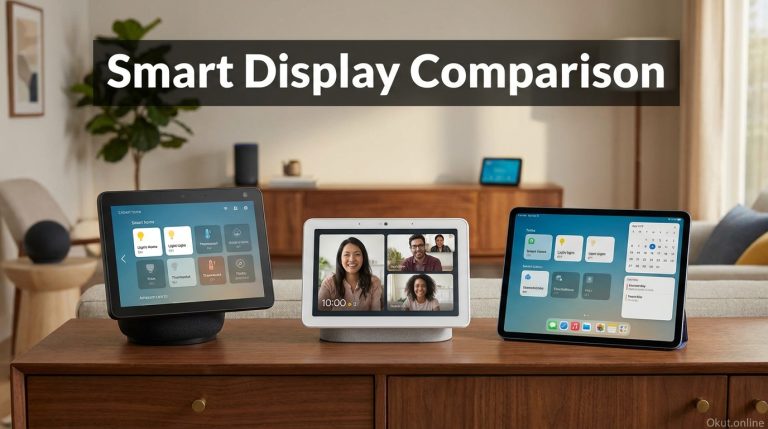
D. Smart Displays
Smart displays add visual interfaces to voice assistant capability.
Amazon Echo Show and Google Nest Hub include screens for visual feedback, video calls, recipe following, security camera viewing, and general visual content.
Audio quality varies by model—larger displays typically include better speakers, though emphasis remains on the visual interface.
Kitchen and common area placement benefits from screens showing recipes, timers, calendars, and photo slideshows.
II. Audio Quality Comparison
For many users, audio quality matters as much as voice assistant capability.
A. Compact Speaker Sound
Compact speakers face physical limitations—small enclosures can’t produce the same bass response as larger speakers regardless of driver quality.
Echo Dot (5th Gen) improved significantly over previous generations, adding better bass response and cleaner highs. Adequate for casual listening, podcasts, and audiobooks.
Google Nest Mini offers similar quality with slightly different tuning—some prefer Google’s approach; differences are subtle.
HomePod mini punches above its size with Apple’s computational audio, delivering surprisingly full sound from a tiny package. Best compact speaker audio in most comparisons.
B. Mid-Range Speaker Sound
Mid-range speakers represent the sweet spot for most users wanting good sound without premium prices.
Google Nest Audio provides excellent sound quality for its $100 price. 75mm woofer and 19mm tweeter deliver balanced audio with respectable bass. Independent reviewers consistently rate Nest Audio’s sound quality highly relative to price.
Amazon Echo (4th Gen) switched to spherical design with 3″ woofer and 0.8″ tweeter. Sound quality is good, though some reviewers prefer Nest Audio’s tuning at the same price point.
Stereo pairing on both platforms lets you pair two speakers for stereo sound, significantly improving the listening experience for music.
C. Premium Speaker Sound
Premium speakers target users who genuinely care about audio quality and will appreciate the difference.
Apple HomePod (2nd Gen) delivers exceptional audio with high-excursion woofer, custom amplifier, and computational audio that analyzes room acoustics. Spatial Audio with Dolby Atmos creates immersive soundstage. For Apple Music subscribers, this represents the premium choice.
Amazon Echo Studio features five speakers including upward-firing driver for Dolby Atmos. Room adaptation measures acoustics and optimizes audio. 24-bit DAC and 330W peak power deliver impressive volume and dynamics.
Both premium options genuinely compete with dedicated audio equipment while adding smart functionality—not just smart speakers with “good enough” audio.
D. Third-Party Premium Options
Some users want excellent audio with voice assistant capability from audio specialists.
Sonos speakers integrate with Alexa and Google Assistant while delivering audio quality that audiophiles respect. Sonos One ($219) and Sonos Era 100 ($249) provide excellent sound with multi-platform voice support.
Bose Smart Speaker lineup offers Bose audio quality with Alexa or Google Assistant built in.
Trade-offs include higher prices and sometimes less-integrated voice experiences than first-party devices.
III. Smart Home Integration
Smart speakers often serve as control centers for broader smart home ecosystems.
A. Hub Functionality
Some smart speakers include radios for directly connecting smart home devices.
Echo devices with built-in Zigbee hubs (Echo 4th Gen, Echo Studio) can directly connect Zigbee devices without separate hubs. This simplifies smart home setup and reduces device count.
Matter/Thread support in newer speakers enables direct connection to Matter-certified devices, future-proofing smart home compatibility.
HomePod and HomePod mini serve as HomeKit hubs, enabling remote access and automation for HomeKit accessories even when away from home.
B. Device Control
Voice control of smart home devices varies in breadth and depth by platform.
Alexa speakers control the widest range of devices—essentially everything with smart capability works with Alexa.
Google speakers control slightly fewer devices but offer superior natural language understanding for commands.
HomePod controls HomeKit devices only (without workarounds), but those devices are certified for security and reliability.
C. Multi-Room Audio
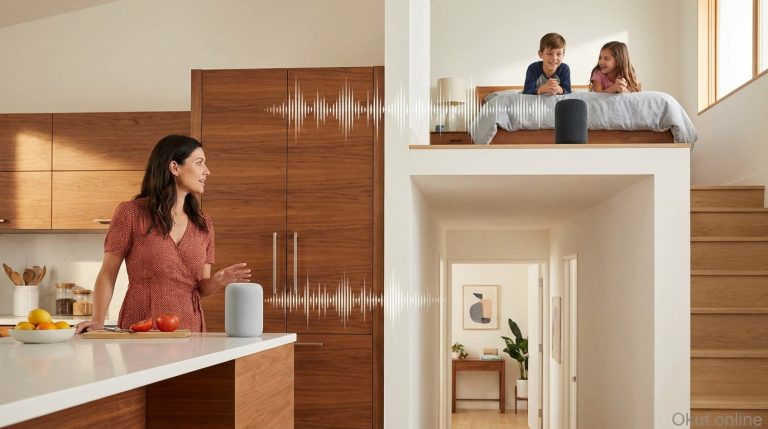
Smart speakers excel at synchronized audio across multiple rooms.
Alexa multi-room music plays synchronized audio across Echo devices throughout your home. Speaker groups enable room-specific or whole-home audio.
Google Home multi-room audio works similarly across Nest speakers and Chromecast-enabled devices.
Apple AirPlay 2 enables multi-room audio across HomePod, Apple TV, and third-party AirPlay speakers.
Cross-platform multi-room is limited—mixing Alexa and Google speakers in synchronized groups isn’t possible, though third-party speakers from Sonos bridge multiple assistants.
IV. Room-by-Room Recommendations
Different rooms have different smart speaker needs and opportunities.
A. Kitchen
Kitchens benefit from smart displays for visual recipe guidance, timers, and hands-free control while cooking.
Echo Show 8 or Nest Hub provide screens for recipes, timers for multiple dishes, and entertainment while cooking. Voice control when hands are messy or wet adds genuine convenience.
Audio quality matters less than in living rooms—clear voice reproduction and audible timers outweigh music quality for most kitchen use.
B. Living Room
Living rooms benefit from audio quality for music, movies, and entertaining.
Premium speakers (HomePod, Echo Studio) or mid-range stereo pairs suit living rooms where audio quality is enjoyed.
Integration with TV audio—Alexa controlling Fire TV, Google controlling Chromecast, or HomePod with Apple TV—adds entertainment value.
C. Bedroom
Bedrooms typically need voice access and alarms more than premium audio.
Compact speakers (Echo Dot, Nest Mini, HomePod mini) provide voice control, alarms, sleep sounds, and smart home control without bedroom-inappropriate screen light.
Smart displays can work if you want visual alarm clocks or ambient displays, but bright screens may disturb sleep.
D. Bathroom
Bathrooms benefit from voice control and music playback in spaces where touching devices is inconvenient.
Compact speakers handle bathroom humidity reasonably well (though none are waterproof). Place away from direct splash zones.
Timer setting, smart light control, and music during morning routines represent common bathroom use cases.
E. Home Office
Home offices need voice assistance for productivity and moderate audio quality for calls and background music.
Any tier works depending on priority—compact speakers for basic voice control, mid-range for background music quality, or premium if the office doubles as listening space.
Speaker phone capability on some devices (particularly smart displays) enables hands-free calling.
V. Comparison by Platform
A. Amazon Echo Lineup
| Model | Price | Audio Quality | Special Features |
|---|---|---|---|
| Echo Dot (5th Gen) | $50 | Basic+ | Temperature sensor, compact |
| Echo (4th Gen) | $100 | Good | Zigbee hub, temperature sensor |
| Echo Studio | $200 | Excellent | Dolby Atmos, spatial audio |
| Echo Show 5 | $90 | Basic | 5.5″ display, camera |
| Echo Show 8 | $150 | Good | 8″ HD display, camera |
| Echo Show 10 | $250 | Good | 10″ rotating display |
B. Google Nest Lineup
| Model | Price | Audio Quality | Special Features |
|---|---|---|---|
| Nest Mini (2nd Gen) | $50 | Basic+ | Wall-mountable, compact |
| Nest Audio | $100 | Very Good | Excellent value audio |
| Nest Hub (2nd Gen) | $100 | Good | 7″ display, sleep sensing |
| Nest Hub Max | $230 | Good | 10″ display, camera, Face Match |
C. Apple HomePod Lineup
| Model | Price | Audio Quality | Special Features |
|---|---|---|---|
| HomePod mini | $99 | Good (for size) | HomeKit hub, Intercom |
| HomePod (2nd Gen) | $299 | Excellent | Spatial Audio, room sensing, temperature/humidity |
VI. Common Mistakes to Avoid
- Choosing Platform by Speaker Price Alone: The cheapest speaker might lock you into an ecosystem that doesn’t match your existing devices. Consider platform fit before individual speaker pricing.
- Expecting Premium Audio from Mini Speakers: Physical limitations mean compact speakers can’t match larger speakers’ audio quality. Match expectations to speaker tier.
- Ignoring Multi-Room Limitations: Different platforms don’t synchronize across ecosystems. Plan whole-home audio within a single platform for true multi-room capability.
- Overlooking Privacy Controls: All smart speakers listen for wake words. Understand and use privacy controls (mute buttons, history deletion, opt-outs) for comfort.
- Placing Speakers Poorly: Corner placement reduces audio quality. Kitchen placements near sinks risk water damage. Consider environment with speaker placement.
VII. Practical Tips for Smart Speaker Success
- Start with One Platform: Begin with a single assistant ecosystem, then expand. Mixing platforms creates complexity without corresponding benefit for most users.
- Invest in Living Spaces: Put premium speakers where you’ll appreciate audio quality; use compact speakers in utility spaces where voice access matters more.
- Use Stereo Pairing: Two mid-range speakers in stereo often sound better than one premium speaker for music listening.
- Configure Room Names Sensibly: Use intuitive room names so voice commands feel natural—”living room” beats “main floor great room west” for voice control.
- Enable Multi-Room Music: Configure speaker groups during initial setup. You’ll use them more than expected once available.
- Review Music Service Integration: Ensure your preferred music service integrates well with your chosen platform. Spotify works everywhere; Apple Music works best with Apple; Amazon Music works best with Alexa.
VIII. Conclusion
Smart speakers at every price point deliver genuine value through voice assistant access and audio playback. The best choice depends on your existing ecosystem (Amazon, Google, or Apple), audio quality requirements, and room-by-room needs. Mini speakers suit bedrooms and bathrooms where voice access matters most. Mid-range options like Nest Audio and Echo provide excellent value for most living spaces. Premium options including HomePod and Echo Studio satisfy audiophiles who want great sound with smart capability. Whichever you choose, proper room placement, platform consistency, and feature exploration ensure maximum value from your smart speaker investment.
Which smart speaker brand do you prefer, and what rooms in your home would benefit most from smart speaker access? Share your setup in the comments!
About the Author