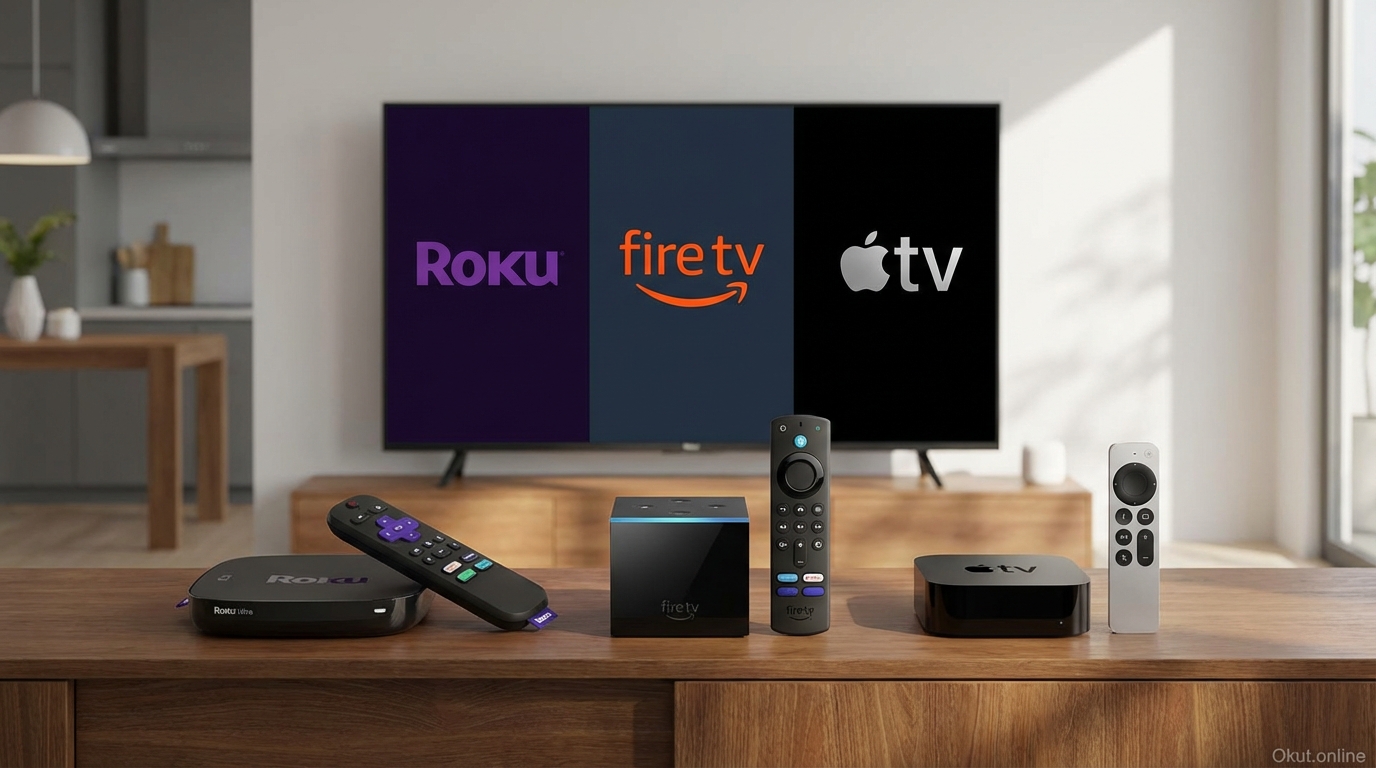
Choosing between Roku, Amazon Fire TV, and Apple TV determines your streaming experience, smart home integration, and ecosystem investment for years to come. In 2026, each platform offers distinct advantages: Roku’s content neutrality and value, Fire TV’s Alexa integration and Amazon ecosystem, and Apple TV’s premium performance and privacy focus. This comprehensive comparison examines features, performance, pricing, and ecosystem considerations to help you select the streaming platform that best fits your household.
I. Platform Overview
A. Roku
Roku pioneered dedicated streaming devices and maintains the largest channel selection.
Philosophy: Content-neutral platform that doesn’t prioritize any streaming service over others.
Business model: Revenue from advertising and channel partnerships rather than content sales.
Device range: $30 Express to $100 Ultra covers budget to premium.
B. Amazon Fire TV
Amazon’s streaming platform deeply integrates with Alexa and Amazon services.
Philosophy: Amazon ecosystem-first approach prioritizing Prime Video and Alexa integration.
Business model: Prime membership drives ecosystem; advertising and content sales supplement.
Device range: $40 Stick 4K to $140 Fire TV Cube from budget to smart home hub.
C. Apple TV
Apple’s premium streaming box emphasizes performance, privacy, and ecosystem integration.
Philosophy: Premium experience with Apple ecosystem benefits; user privacy prioritized.
Business model: Hardware profit plus Apple TV+ subscription and services revenue.
Device range: $129-149 for Apple TV 4K (only one tier).
II. Interface and Experience
A. Roku Interface
Design: Simple grid of app tiles; channels organized as you prefer.
Content discovery: Unified search across services; content-agnostic recommendations.
Advertising: Home screen includes sponsored content and advertisements.
Customization: Rearrange channels freely; minimal bloatware.
B. Fire TV Interface
Design: Content-first rows with recommendations; apps secondary to content.
Content discovery: Strong Prime Video promotion; integrated recommendations across services.
Advertising: Home screen ads and content promotions more prominent than Roku.
Customization: Limited; Amazon content prioritized regardless of preference.
C. Apple TV Interface
Design: Clean, premium appearance; single row of recent apps with content suggestions.
Content discovery: TV app aggregates content across services; Up Next feature tracks viewing.
Advertising: Minimal to none on home screen; premium experience without intrusive ads.
Customization: Rearrange apps; folders available; curated aesthetic.
III. Performance Comparison
A. Processing Power
Apple TV 4K: A15 Bionic chip provides significant processing advantage; smoothest navigation and fastest app launches.
Fire TV Cube: Fastest Fire TV device; competitive with mid-tier Apple TV performance.
Roku Ultra: Premium Roku performs well but not quite Apple TV level.
Budget devices: $30-50 devices across all platforms show more lag and slower loading.
B. 4K and HDR Support
All current-generation devices support 4K HDR, but implementation varies:
Apple TV 4K: Dolby Vision, HDR10+, HDR10; excellent HDR tone mapping.
Fire TV 4K devices: Dolby Vision, HDR10+, HDR10; good HDR support.
Roku 4K devices: Dolby Vision, HDR10+, HDR10; platform-wide support.
C. App Launch Speed
App launch times vary by device tier within each platform:
- Premium devices: 2-4 second app launches across platforms
- Budget devices: 5-10 second launches common
- Apple TV advantage: Consistently fastest across all apps
IV. Voice Assistant and Smart Home
A. Roku Voice
Capability: Search and navigation; limited smart home control.
Smart home: Roku Smart Home platform for compatible devices; growing but limited selection.
Third-party: Alexa and Google can control Roku via skills/actions.
B. Fire TV with Alexa
Capability: Full Alexa with all smart home capabilities; extensive skill library.
Smart home: Fire TV Cube serves as Alexa smart home hub (Zigbee in original Cube).
Hands-free: Fire TV Cube enables far-field voice control without remote.
C. Apple TV with Siri
Capability: Siri for search, navigation, and HomeKit control.
Smart home: Apple TV serves as HomeKit hub enabling automations and remote access.
Privacy: Siri processing with strong privacy protections.
V. App and Channel Availability
A. Major Streaming Services
Netflix, Prime Video, Disney+, Hulu, HBO Max, Apple TV+ available on all platforms.
No significant differences for major services.
B. Niche and Specialty Apps
Roku: Largest channel store with many niche and free ad-supported channels.
Fire TV: Good selection; some apps may require sideloading.
Apple TV: Curated App Store; quality high but selection smaller.
C. Gaming
Apple TV: Apple Arcade integration; controller support; best gaming on streaming devices.
Fire TV: Luna cloud gaming; casual games available.
Roku: Limited gaming; not a strength of the platform.
VI. Ecosystem Considerations
A. For Amazon Prime Members
Fire TV integrates Prime Video, Amazon Music, and Prime benefits seamlessly.
Alexa skills extend Fire TV capability; Echo device integration is excellent.
Best choice if deeply invested in Amazon ecosystem.
B. For Apple Users
AirPlay enables streaming from iPhone, iPad, Mac; seamless casting.
Apple One bundle (if subscribed) provides TV+, Music, Arcade, iCloud.
HomeKit hub capability valuable for Apple smart home users.
Best choice for iPhone/Mac households.
C. For Platform-Neutral Users
Roku treats all services equally—no platform receives preferential treatment.
Works with Alexa and Google through external integration.
Best choice for users without strong ecosystem preference.
VII. Price Comparison
| Tier | Roku | Fire TV | Apple TV |
|---|---|---|---|
| Budget | Express 4K: $40 | Stick 4K: $50 | N/A |
| Mid-Range | Streaming Stick 4K: $50 | Stick 4K Max: $60 | N/A |
| Premium | Ultra: $100 | Cube: $140 | Apple TV 4K: $129 |
VIII. Recommendations by User Type
A. Choose Roku If:
- You value content neutrality and no platform bias
- Budget is primary concern (Express 4K at $40)
- You want the largest selection of free ad-supported channels
- You don’t need advanced smart home integration
B. Choose Fire TV If:
- You’re an Amazon Prime member
- You use Alexa for smart home control
- You want hands-free voice control (Fire TV Cube)
- You prefer Amazon’s content-first interface
C. Choose Apple TV If:
- You use iPhone, iPad, or Mac and want seamless integration
- You prioritize performance and premium experience
- You want Apple Arcade gaming capability
- You use HomeKit for smart home and want hub capability
- Privacy is a significant priority
IX. Common Mistakes to Avoid
- Buying on Brand Alone: Evaluate features matching your needs, not just brand preference.
- Ignoring Ecosystem: Consider what phone, smart speakers, and services you already use.
- Overspending on Premium: Budget devices ($40-60) suffice for basic streaming needs.
- Underspending When Performance Matters: Premium devices justify cost if speed and experience matter to you.
X. Conclusion
Roku provides the best value and content neutrality for users without strong ecosystem preferences. Fire TV delivers optimal experience for Amazon Prime members and Alexa smart home users. Apple TV offers premium performance and seamless integration for Apple ecosystem households. All platforms handle major streaming services well; the choice comes down to ecosystem integration, interface preference, and how much you value performance versus budget. For most households, their existing phone and smart home ecosystem should guide platform choice—iPhone users benefit from Apple TV, Alexa households from Fire TV, and platform-neutral users from Roku’s equal treatment of all services.
Which streaming platform do you prefer, and what features matter most to you? Share your streaming setup in the comments!
About the Author